I remember how overwhelming it was when I first began cloth diapering. There were so many types of cloth diapers and so many choices. I had no idea where to start. Remembering that feeling has made me want to try extra hard to make it as simple as possible for you. I promise it will all make so much more sense once you start using cloth diapers!
As with anything, especially parenting, plan for bumps in the road. No one cloth diaper will work for all babies. No laundry detergent will work for all households. However, as long as you stick to your convictions (why you began looking into cloth diapers) then you’ll ensure success in the long run.
You may have noticed that there are different types of cloth diapers. Some need a cover, others need inserts and then some need nothing added to them. The following is a condensed explanation of the different cloth diaper systems.
Check here for our recommendations on our favorites of each!
Styles and Types of Cloth Diapers
POCKETS (aka Pocket Diaper)
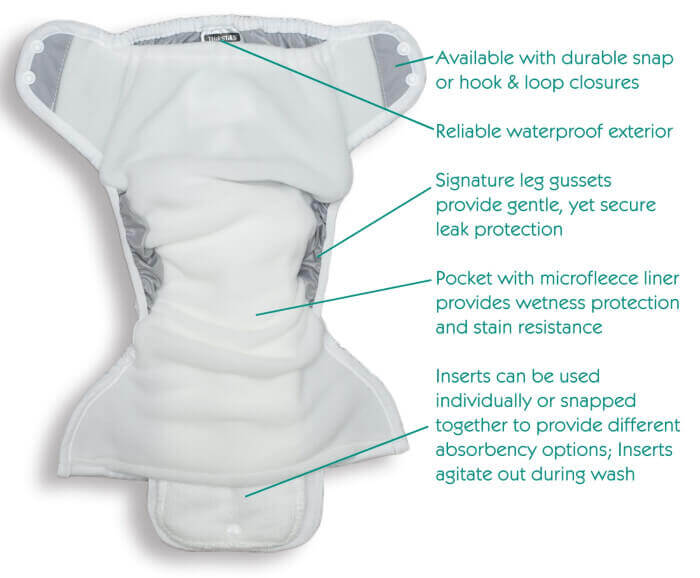
This is a two-part cloth diaper. An outer waterproof cover and an inner stuffable absorbent part.
The outer waterproof part of the pocket diaper is usually made with a PUL (polyurethane laminate) or TPU (thermoplastic polyurethane).
The inner lining (what pocket is made of) material choices for a pocket include microfleece, suede cloth, velour, athletic wicking material, Minky, cotton, or bamboo. Different materials will feel different on the baby when wet. Of the fabrics listed above, microfleece, suede cloth, and athletic wicking material are considered “stay dry”. This means the baby feels dry after a pee. But many people love the option of a completely natural fabric lining and go with those options as well.
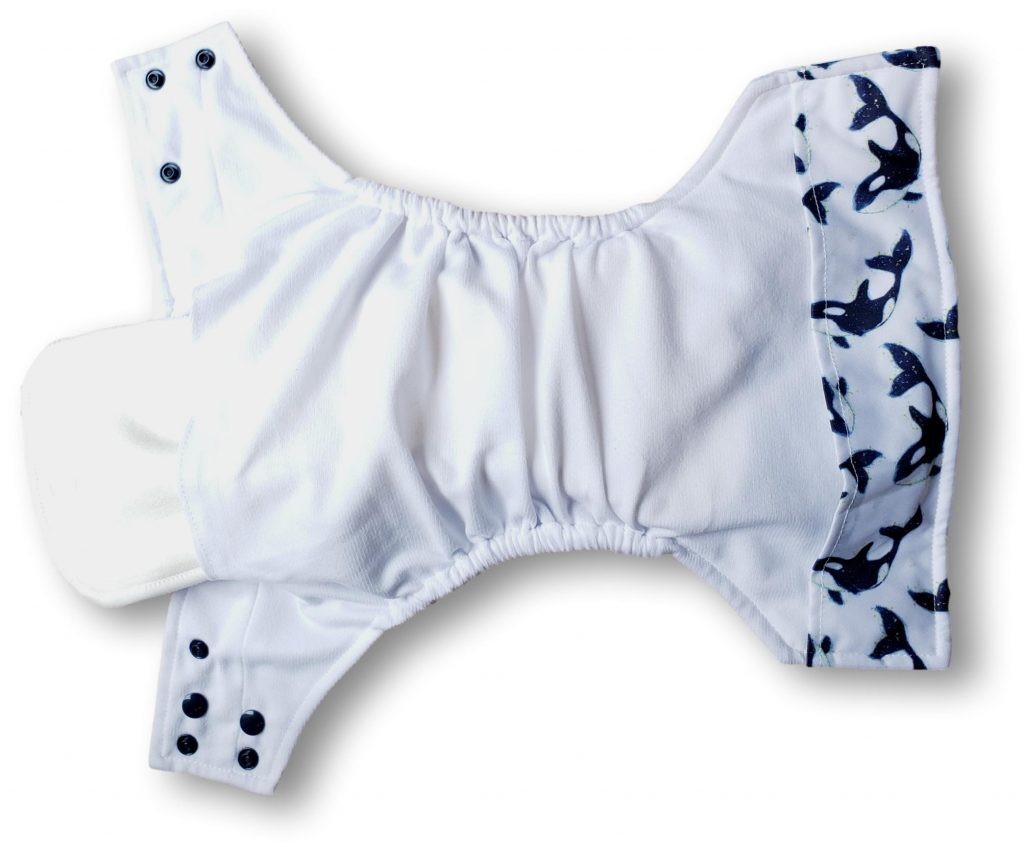
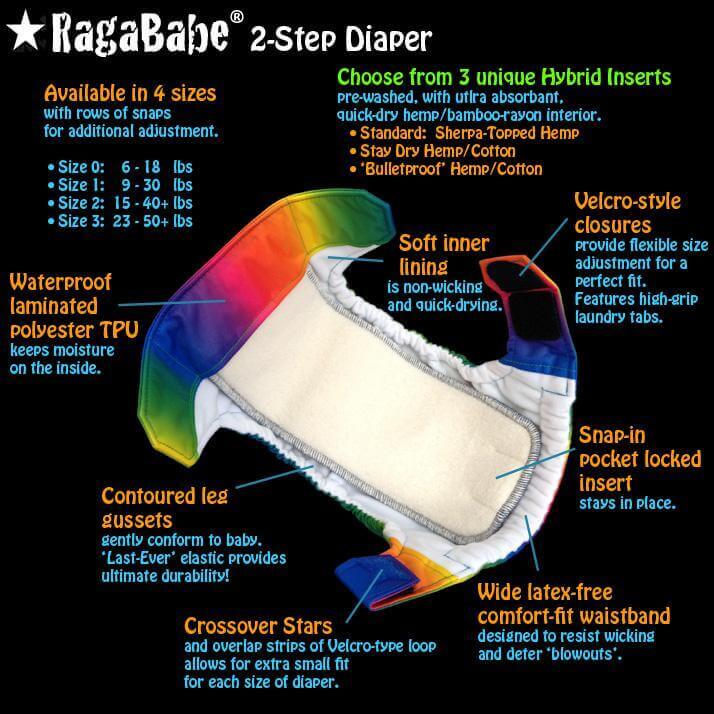
A pocket diaper is 2 layers of material sewn together on 3 sides leaving an opening for you to insert the amount of absorbent material you desire. It may also have an opening at the other end. Larger openings allow for inserts to come out in the wash easier and also make it easier to stuff. Just something to keep in mind when looking at brands.
Many lower-priced pocket diaper options come with microfiber inserts. You can also find hemp, cotton, and bamboo inserts sold with pocket diapers. You can stuff almost anything inside the pocket. As long as it fits inside the elastic once closed it works!
ALL IN ONES/AIO
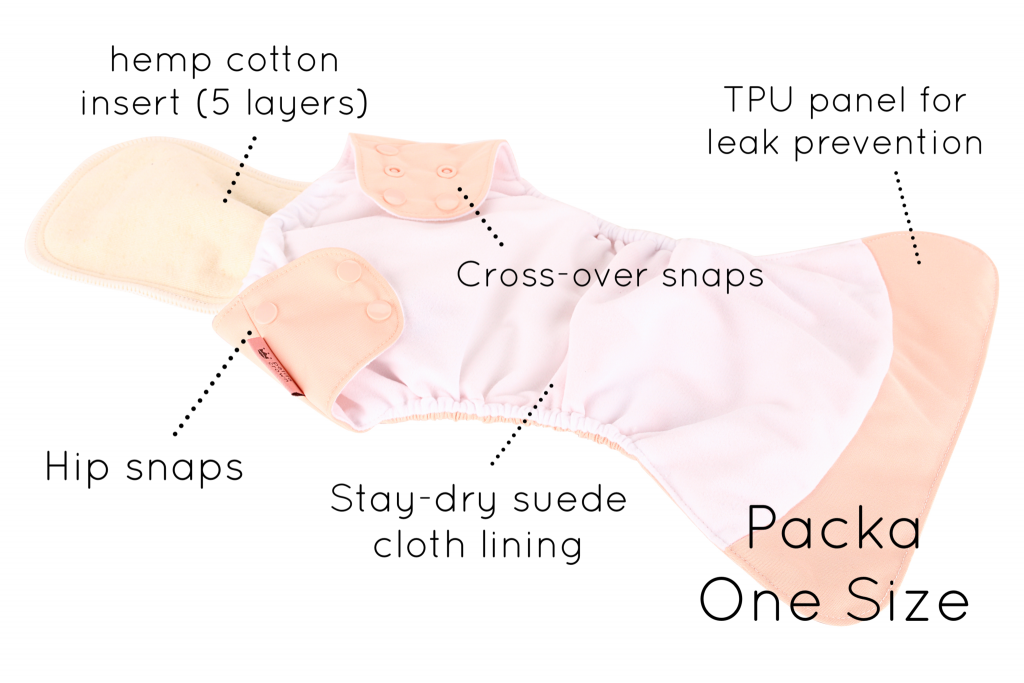
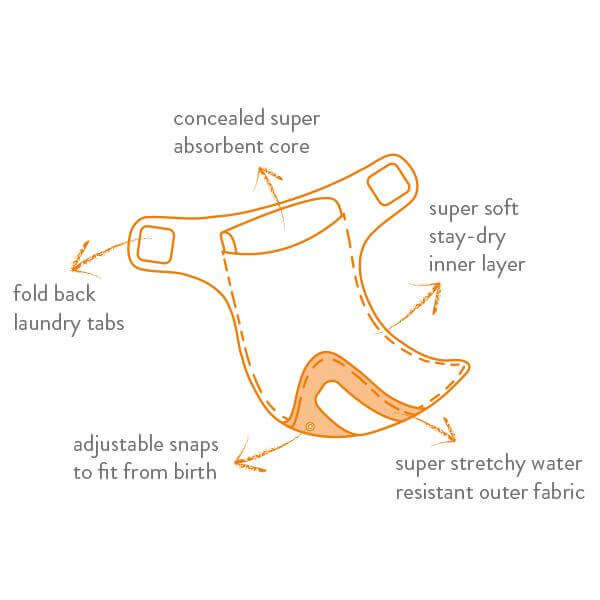
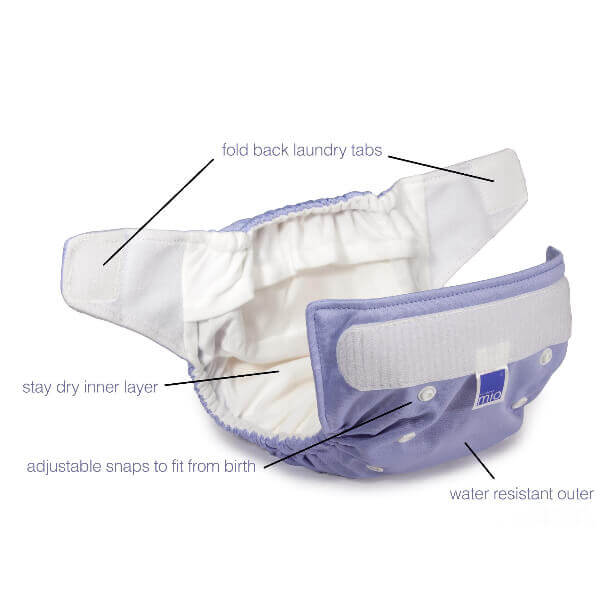
An all-in-one is generally viewed as a type of cloth diaper that needs nothing else and is most similar to a disposable. The soaker (or insert) is either sewn internally (on all four sides) or externally (referred to as a quick dry soaker) and can close with snaps or Velcro (Velcro is a trademark but there are two other similar products: aplix (softer, long life, doesn’t roll in like touch tape can) or touch tape (stronger stick and available in a variety of colors).
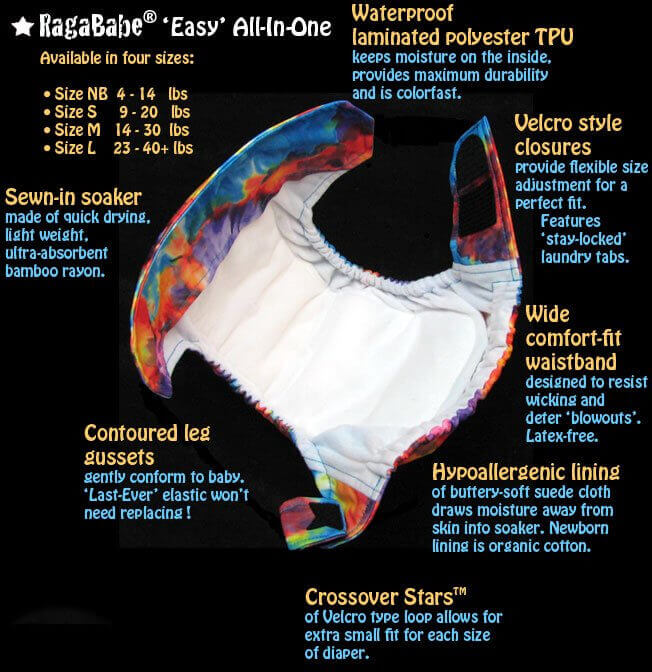
An AIO does not require a cover as it is already there. The outer is made of waterproof TPU (heat-sealed and often softer and more pliable) or PUL (chemically sealed). An AIO with a sewn in soaker will have a longer drying time because the air cannot circulate as well around the hidden material.
An external soaker (not sewn in on all four sides), also referred to as a Quick Dry soaker, allows for the soaker to agitate out in the wash for easier washing and for air to circulate the soaker when drying, therefore having quicker dry time. This does mean that you have to stuff it back into a pocket after washing and drying.
The addition of a pocket to an AIO makes it a stuffable all-in-one and gives you the ability to add an extra insert or booster behind the soaker for added absorbency. This has the benefit of less shifting around.
All in Two/AI2
Another type of cloth diaper is an all-in-two cloth diaper that has a waterproof outer cover and a snap-in or lay-in soaker (insert).
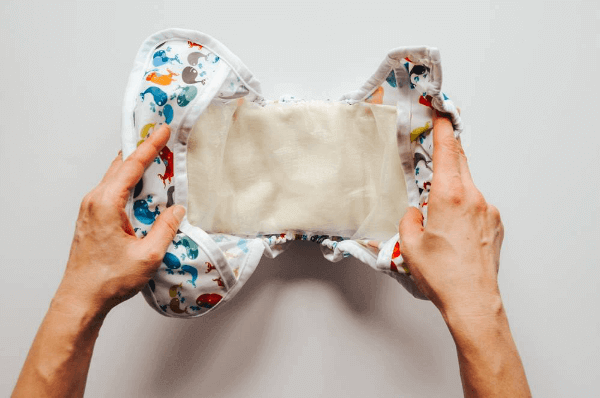
The name All in Two arose from the ability to get two uses out of each diaper but people can often get more. When your child pees, theoretically you can remove the soaker and replace it with another if the shell did not get wet or soiled with poo. People can often get even more than two uses out of an AI2 cover.
You’ll find some AI2s have a wipeable interior and others are lined with suede cloth. It’s my personal preference if you reuse a suede cloth AI2. You might see some debate about this online. I did and had no issues at all. If the inner was damp I would just lay it to the side and use it at the next change.
All in twos are a great option when you are short on space. They also wash easier because the insert is loose in the wash. Same with drying.
FITTEDS
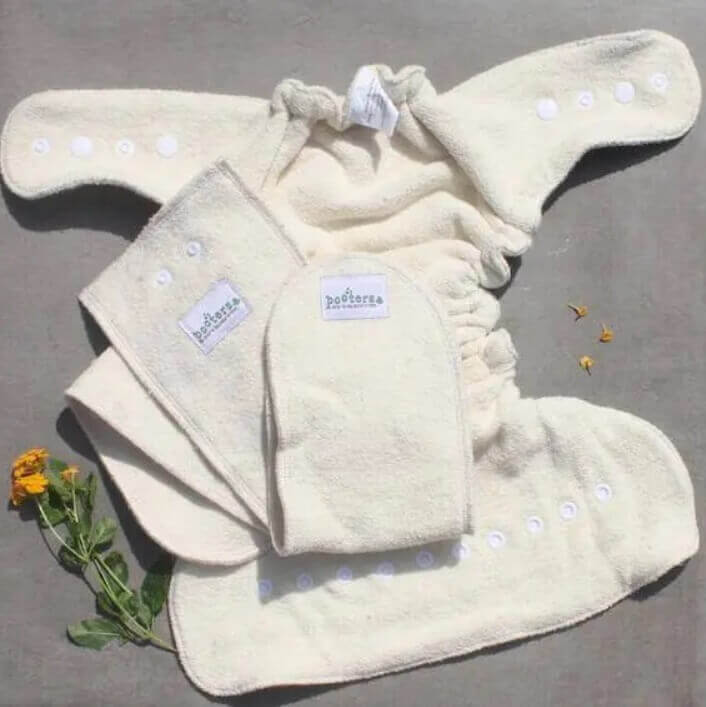
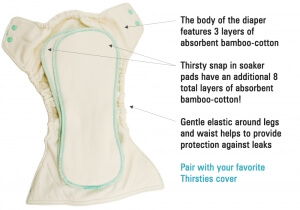
A fitted is just an absorbent part of a diaper. And all of it is the absorbent part. That makes it amazing for heavy wetters or nighttime. They don’t come with waterproofing, so you’ll need a cover for that.
Fitted diapers can be made from cotton, hemp, fleece, velour, bamboo, knits, various types of terry cloth, kitchen towels, old t-shirts, sweatshirts, and many other scrap fabrics you may have lying around. Hemp blends and bamboo blends are your most absorbent option and will also be on the more expensive side. They are great as an overnight option. Cotton is super affordable but not as absorbent making it better for day use.
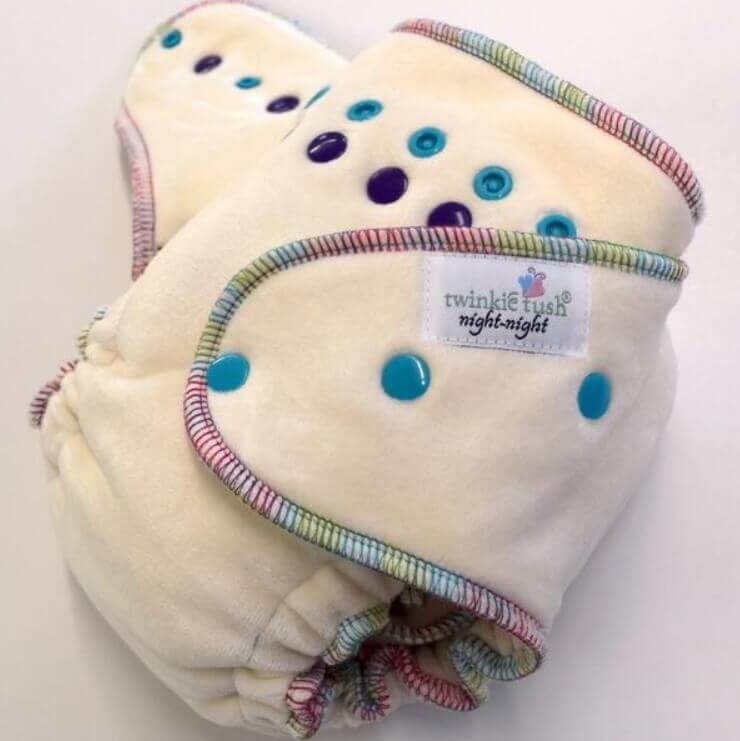
Without a cover, the pee will soak through and get you or the furniture wet. If you are just hanging out at the house for the day a cover isn’t necessary. Just make sure to consistently change the diaper before a leak occurs. This is great if you are looking for a breathable option.
You will undoubtedly stumble upon fitted cloth diapers and ask yourself the same question everyone asks at one time or another, “why are fitteds so expensive and cute when you just have to cover them up?” They are multiple layers. That means more fabric and time to put together. They are more absorbent because of that and that is also why they aren’t cheap.
HYBRID FITTEDS
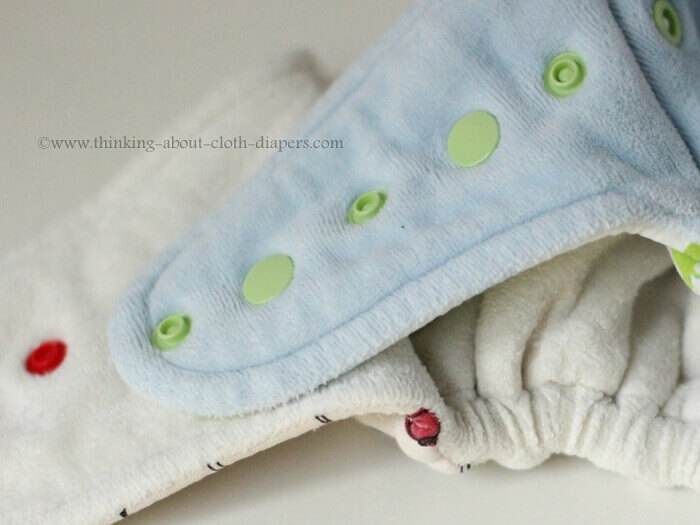
A hybrid fitted is very similar in its construction to a fitted with one notable addition. They feature a hidden layer of poly fleece. Some high-end hybrid fitteds like the twinkie tush fusion night night even have two layers of poly fleece.
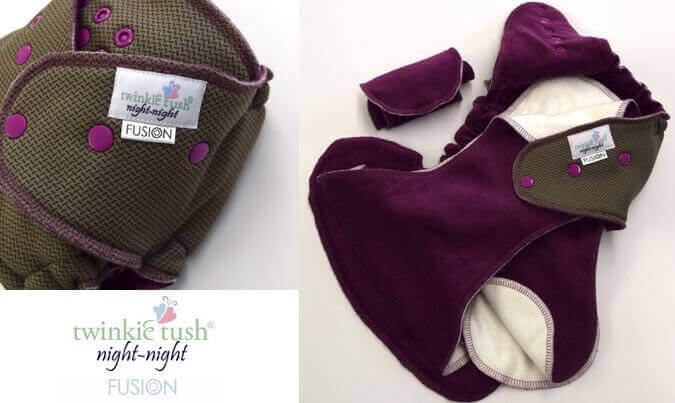
Not all fleece types are created with the same purpose. The fleece used in hybrid fitteds is the kind that is used for purposes of wind and water-repellent features in other products. You’ll often see hydrophobic fleece, Wind Pro fleece, and Polar Fleece used. This is not the same as the fleece blankets you’ll find at Walmart.
In a hybrid fitted the polyester fleece layer acts as a repellent to the urine. Pushing it back into the diaper so the many layers have a better chance of absorbing it vs moving to the outer of the diaper causing a wet feeling. You end up with a mild waterproofing effect. Many find no additional cover is needed especially for day use. For full waterproofing and at night you would want to use a cover to give full waterproofing to the diaper.
PREFOLDS
Prefolds are an absolute staple that every mother should have in her stash. They are amazingly durable and versatile. A prefold diaper is a rectangular piece of cloth and is often sewn into 3 sections.
If that is the case, the outside layers might contain 4 layers of fabric and the middle contains either 6 or 8 layers. The middle layer is the absorbent layer. You will see the prefolds described as 4x8x4 or 4x6x4. This describes the number of layers in the sections. It does not always mean the 4x8x4 are more absorbent. It is the weight of the fabric that indicates absorbency. Some prefolds have the same number of layers throughout.
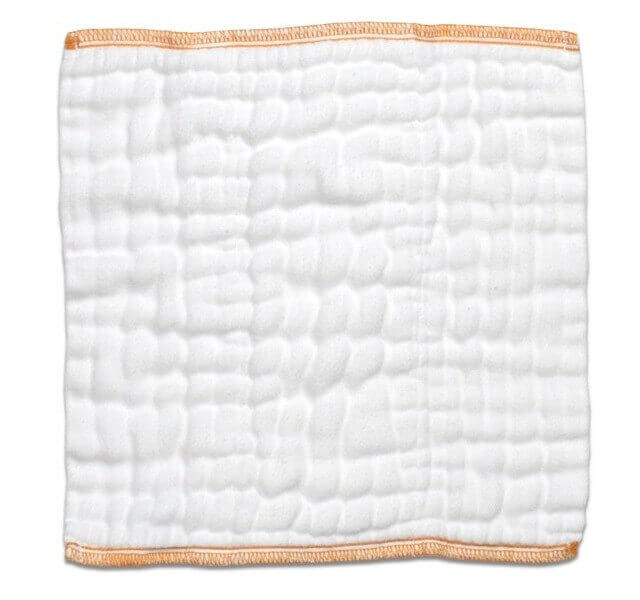
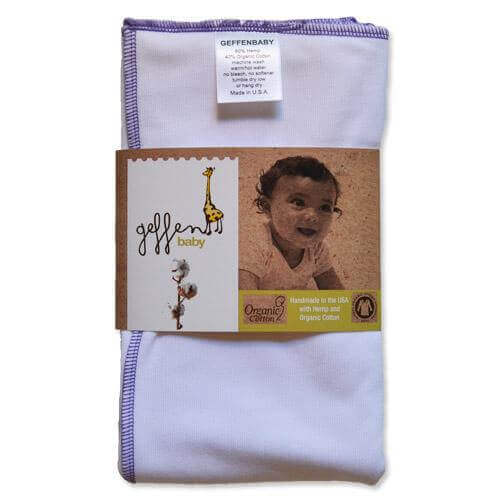
You’ll find prefolds made out of cotton, bamboo, or hemp blends. In that order, you go from cheapest to more expensive, but also more absorbent and trim at the higher price points.
Prefolds generally come in three sizes-
- Preemie (4-10pounds),
- Infant (newborn to 15 pounds) &
- Premium/Toddler (15-30 pounds)
There is also the choice of bleached or unbleached. Bleached prefolds are not whitened with bleach but rather with peroxide. Unbleached are in a natural cream-colored state. Unbleached do require extra prep time to remove the natural oils in the fibers.
Prefolds can be pinned or snappied on your baby or you can fold it in 3 (trifold) and lay it in a cover. If you choose to use a different system prefolds can still be used as pocket stuffers or doublers. They are an investment worth making.
I just padfolded my prefolds. I highly recommend having at least some in your cloth diaper arsenal.
FLATS
Flat diapers are large squares of single-layer material.
They can be broken down into two main categories, Non Stretchy and Stretchy. Typically the Non Stretchy Flats are made from Birdseye weave cotton or cotton muslin. Stretchy Flats may contain hemp and bamboo blended with cotton.
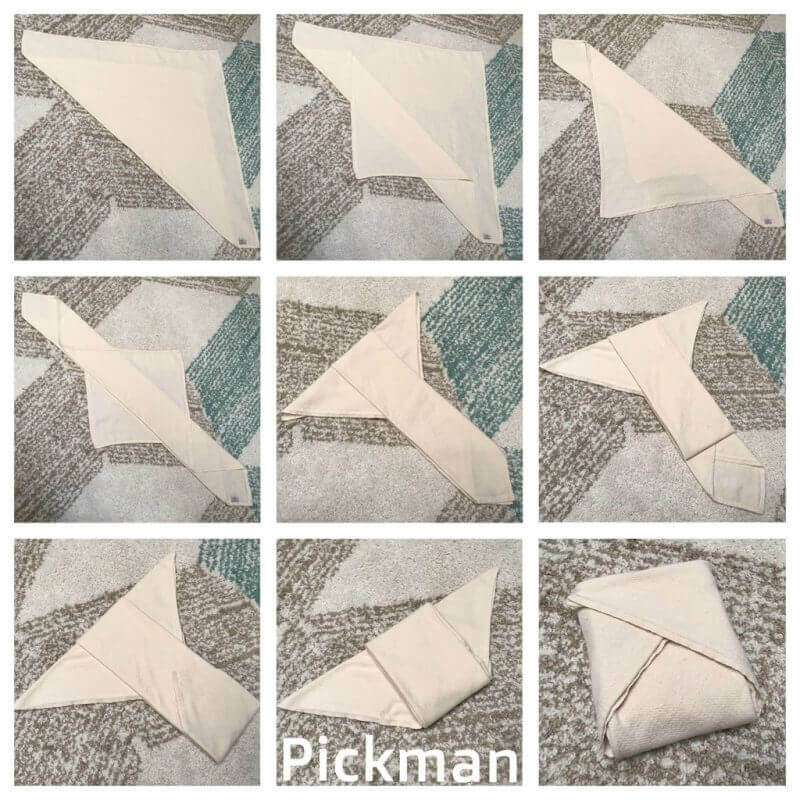
Flats can be folded in several ways to fit your baby. Some folds require fastening with either pins or a Snappi. Some may be tucked into itself in a way that secures the flat on the baby.
Check this out for a few of my favorite posts on flats. You can also find a multitude of flat folds on Pinterest and YouTube.
There are also many styles of custom flats designs. I don’t want to go into too much detail here but a few that you may find are called contours, fixed flats, and preflats. I’ll do a separate post soon to go over those in more detail.
Chart that explains types of cloth diapers
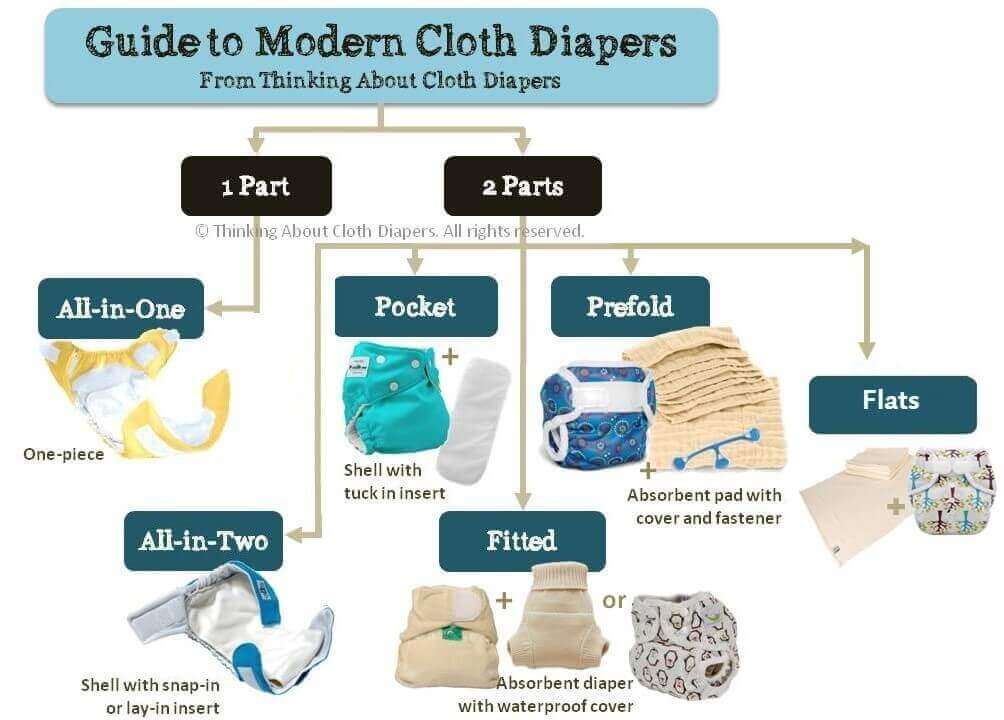
You can get further info about cloth diapers on our sister site, Thinking About Cloth Diapers!
John says
My job allows more flexibility with time so I’ve been doing most of the researching and learning to prepare for our first. I have to say there is a lot of information regarding cloth diapers. I’m sure a lot of it has to do with new innovations and conveniences. However, you’re website is helpful. You’ve put a lot of work into it. After patiently navigating through the pages and learning terms, I think I have a better understanding of the differences of each system and how it works overall. We will now be able to make an informed decision thanks to you. God bless and stay safe.